
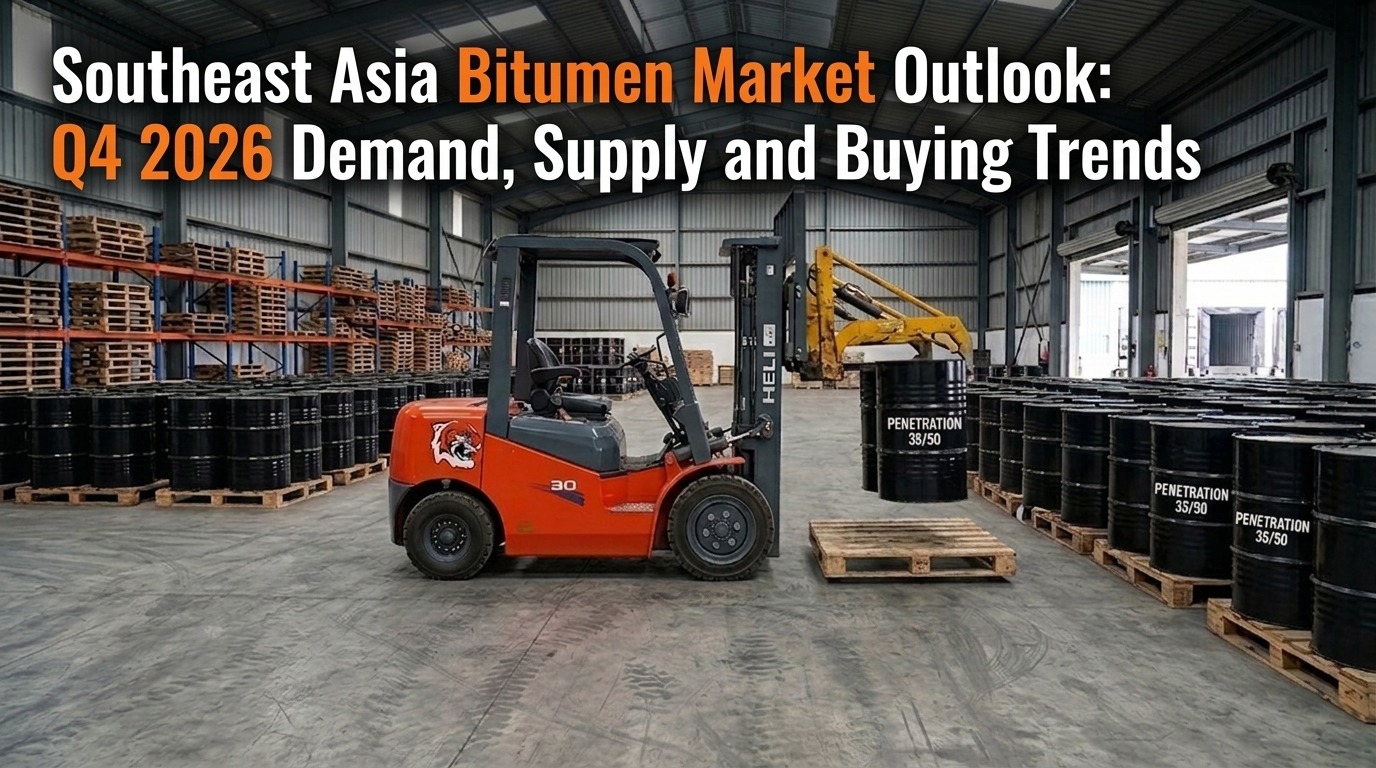
The Southeast Asia bitumen market entered the final quarter of 2026 with firm prices and limited supply. Regional refiners have restricted output, while importers with year-end project deadlines are still looking for cargoes. At the same time, budget constraints in some countries are holding back demand.
This outlook looks at conditions market by market, what importers should consider when buying, and the factors likely to shape the coming months.
Key points at a glance
- Seaborne bitumen prices in Singapore firmed in mid-October on buying interest for November-loading cargoes.
- Export supply is tight because regional refiners have limited bitumen output.
- Demand is uneven: strong for urgent projects, weaker where public budgets have not kept pace with prices.
- Fixed-price offers are scarce, and more cargoes are being offered on a floating, index-linked basis.
- Australia and New Zealand demand is rising with the spring construction season.
Supply: tight export availability
Regional export supply remains limited. Refiners have restricted bitumen output, and some are focusing on seaborne sales. Offers for November-loading cargoes were limited in mid-October, while importers with specific project needs were prepared to pay higher prices.
Some importers have eased the pressure by securing cargoes from other regional origins. Buyers with enough inventory were able to stay out of the market.
Pricing structures are shifting
With supply tight, few sellers have been willing to offer fixed prices. Several cargoes were offered on a floating basis linked to a published regional price benchmark. This makes it easier to secure a cargo but leaves the buyer exposed to further price movements before loading.
Refinery economics
Refiners can sell heavy residue as bitumen or use it in fuel oil. In mid-October, the price premium of seaborne bitumen over fuel oil in Singapore narrowed. Strong fuel oil margins can encourage refiners to make more fuel oil and less bitumen, although market participants said this had not yet shown up in the market.
Market-by-market demand
Vietnam
Demand in Vietnam is mixed. Some contractors are rushing to complete projects before year-end deadlines, while others are waiting because current domestic prices make their projects unviable. Importers with project-specific needs raised their bids for November cargoes, but many are focusing on smaller parcels. Some already hold enough stock from other regional sources.
Indonesia
The fourth quarter is usually Indonesia’s peak paving season. This year, consumption in Java has been stable, but demand in other regions, especially eastern Indonesia, has been slow because government funding has not kept pace with import prices. Only importers whose customers can accept higher prices have been actively buying, and some contractors have delayed roadworks because of supply shortages.
Malaysia
Malaysian demand has been moderate to strong as projects work toward year-end deadlines. Higher prices for truck-delivered bitumen from Singapore have led some contractors to postpone less urgent work. Market participants warn that supply could become short if construction activity rises and truck deliveries arrive late, and at least one major domestic refinery may run at lower rates in November.
Thailand
Drier weather and receding floodwater have allowed road repairs to restart after recent flooding, and domestic consumption has started to recover. Market participants expect demand to pick up further if dry weather continues. Thai export availability remains limited because refinery production has been curtailed.
Australia and New Zealand
Spring weather has lifted demand in Australia and New Zealand as the construction season gets under way. Importers are sourcing cargoes from several Asian origins alongside existing term supply, as spot offers from Singapore remain scarce.
Neighbouring markets to watch
Conditions further north are moving the other way. In China, domestic prices weakened in mid-October as buyers purchased only for immediate needs and expected winter to slow demand in the north. Southern China is entering its peak demand season, so import demand there is expected to stay steady. South Korean export values eased after a large export tender concluded.
For Southeast Asian buyers, softer prices to the north could make some alternative origins more competitive, depending on freight and timing.
What importers should consider
- Secure November and December volumes early. With export supply tight, waiting for lower prices carries the risk of not finding a cargo.
- Choose your pricing basis carefully. Floating, index-linked pricing improves access to cargoes but adds price risk. A fixed price gives certainty when it is available.
- Match parcel size to demand. Smaller cargoes can reduce inventory risk while project demand remains uneven.
- Diversify supply origins. Importers that secured cargoes from alternative sources have been better placed during the current tightness.
- Confirm specifications. Agree the grade, such as pen 60/70, along with packaging, loading window, and delivery terms, in the contract.
- Plan logistics with the project schedule. Allow for vessel timing and, for truck-supplied markets, delivery delays during busy periods.
Outlook
If export supply stays restricted and year-end projects keep buyers active, Southeast Asian bitumen prices are likely to remain firm in the near term. Budget limits in parts of Indonesia and Vietnam, and softer prices in China, may limit further increases. These are indications based on current conditions, not price forecasts, and the market can change quickly.
Plan your Asia-Pacific supply with Tiger Bitumen
Tiger Bitumen is a brand of HY International Group. If you are planning bitumen purchases for projects in Southeast Asia or the wider Asia-Pacific region, contact the Tiger Bitumen team to discuss your grade, cargo size, packaging and delivery requirements.
Contact the Tiger Bitumen team
This article reflects market conditions in mid-October 2026, which can change quickly. It is for general information only and is not trading or investment advice.